Blog
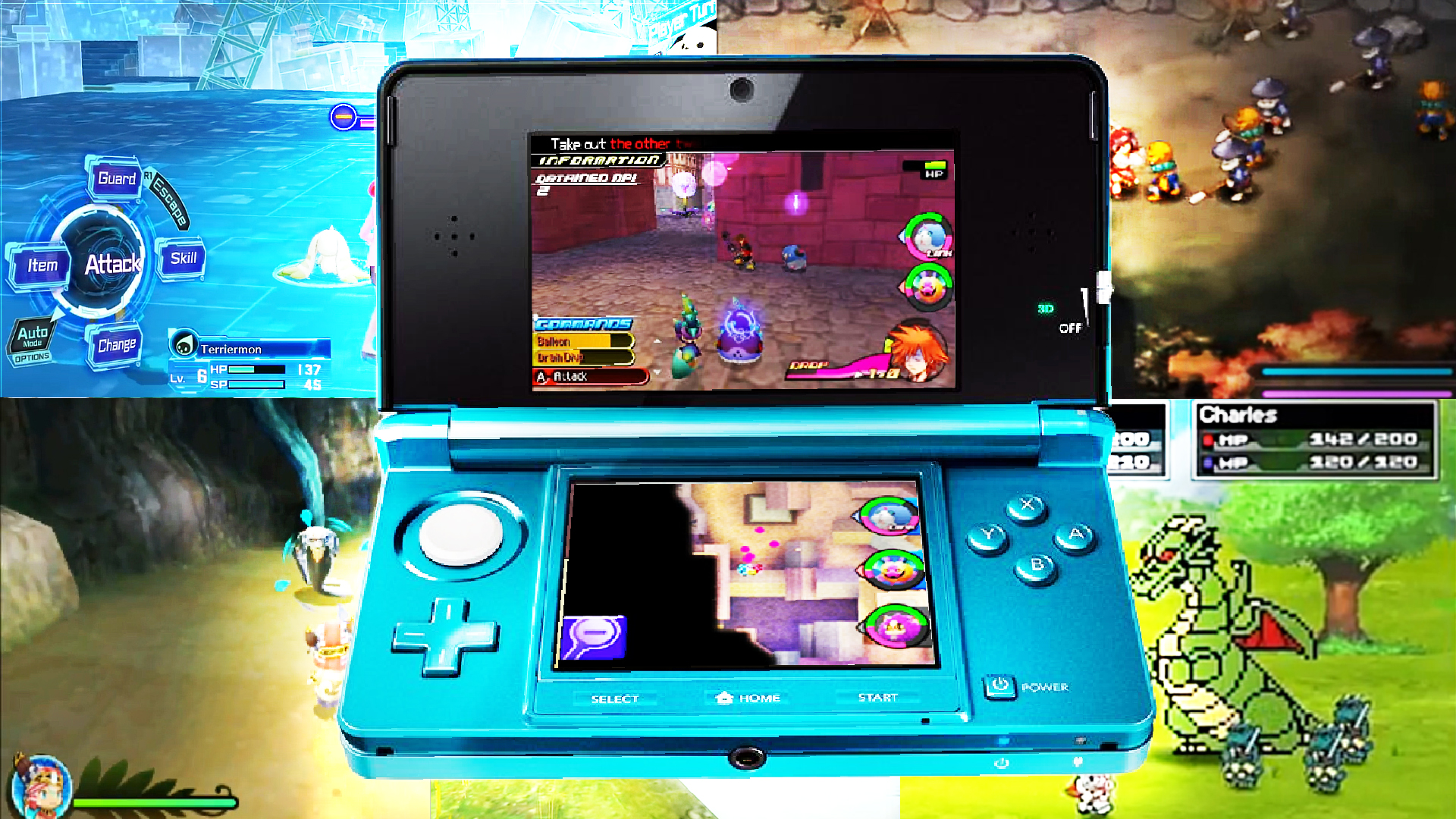
10 Must-Have Turn-Based 3DS RPGs Still Worth Playing in 2026


The Nintendo 3DS built one of the most impressive RPG libraries in handheld history, and somehow half the best games still fly completely under the radar. Look, I get it—when you think 3DS RPGs, you probably think Pokémon, maybe Fire Emblem. But there’s so much more depth here, from hidden Dragon Quest gems that never made it west to crossover masterpieces that showcase some of the best sprite work you’ll ever see on a handheld.
Hey, it’s Marco, and here at SumoShopStore, we see these 3DS units come through constantly. What strikes me every time is how many people grab a system for one or two big titles and completely miss the incredible variety sitting right there in the eShop or used game stores. If you’re wondering what the best turn-based RPGs are on the 3DS in 2026, this is your definitive guide to the games that make this handheld an absolute powerhouse for RPG fans.
Table of Contents
- Must-Have 3DS Turn-Based RPGs at a Glance
- Why the 3DS Became an RPG Paradise
- Dragon Quest Monsters: Terry’s Wonderland 3D — The Pokemon Alternative You Never Played
- Persona Q — Where Dungeon Crawling Meets Social Links
- Project X Zone 2 — The Ultimate Crossover SRPG
- Dragon Ball Fusions — The Deepest Fighter You’ve Never Heard Of
- Etrian Odyssey Nexus — The Perfect Send-Off for Dual Screen Dungeon Crawling
- Bravely Second — Job System Mastery
- Collector’s Guide: Which 3DS Model Handles These RPGs Best
- Why These Games Still Matter in 2026
- Pokémon X and Y — The 3D Evolution That Worked
- Fire Emblem Awakening — The Strategy Game That Saved a Series
- Where to Pick Up a Nintendo 3DS in 2026
- Frequently Asked Questions
- Which 3DS model is best for RPGs in 2026?
- Are these RPGs still worth playing with modern graphics standards?
- How do I play Dragon Quest Monsters if it never released in the west?
- Which of these games offer the most content for the money?
- Do I need to play earlier games in these series to understand them?
- Are physical copies worth tracking down, or is digital fine?
- How’s the difficulty on these games for RPG newcomers?
- Can I still buy these games digitally in 2026?
Must-Have 3DS Turn-Based RPGs at a Glance
- Dragon Quest Monsters: Terry’s Wonderland 3D — Hidden gem with 600+ monsters to collect (fan translation required)
- Persona Q — Perfect fusion of Etrian Odyssey dungeon crawling and Persona combat
- Project X Zone 2 — Incredible sprite work meets massive crossover SRPG action
- Dragon Ball Fusions — Surprisingly deep combat with unique prediction mechanics
- Etrian Odyssey Nexus — Series finale with 19 classes and manual map-drawing
- Bravely Second — Perfected job system with 30+ classes to master
- Pokémon X and Y — The 3D evolution that modernized the franchise
- Fire Emblem Awakening — The game that saved the series
- Shin Megami Tensei IV — Dark post-apocalyptic demon fusion RPG
- Dragon Quest VII — 100+ hour epic rebuilt for handheld perfection
Why the 3DS Became an RPG Paradise
The 3DS hit this perfect sweet spot where Japanese developers were still heavily invested in handheld development, but the hardware was finally powerful enough to handle ambitious projects. You had studios experimenting with the dual screens, the 3D effect, and the portable format in ways that created genuinely unique experiences.
What really strikes me is how diverse the RPG subgenres are on this system. You’ve got traditional JRPGs, SRPGs, dungeon crawlers, monster collectors, crossover games—stuff that would never get greenlit on a home console found a home here. The lower development costs meant studios could take risks, and man did they pay off.
The result is a library that still puts modern handhelds to shame in terms of pure variety and depth. These aren’t just mobile game cash grabs or quick ports—these are full-featured RPGs designed specifically for the 3DS experience.
Dragon Quest Monsters: Terry’s Wonderland 3D — The Pokemon Alternative You Never Played
Dragon Quest Monsters is probably the best RPG on the 3DS that most western players have never experienced. This remake of the Game Boy classic never got an official western release, but it’s now easily playable with a fan translation that’s honestly better than most official localizations I’ve seen.


Dragon Quest Monsters: Terry no Wonderland 3D
As Terry, a young boy whose sister gets kidnapped, you’re transported to a world where monsters roam freely and the only way to save her is to become the ultimate monster master. For anyone who loves Pokémon but wants something with more mechanical depth, this is your holy grail. We’re talking 600 monsters to collect, each with unique abilities and growth patterns.
The synthesis system is where this game really shines. You can fuse any two monsters to create something new, sharing abilities across different types with incredible flexibility. Want a dragon that can cast healing spells? A slime that hits like a truck? The customization options are nearly endless.
Combat starts simple but evolves into this intricate dance of elemental affinities, status effects, and combo attacks. Each monster levels individually and learns skills through a talent grid system that lets you steer their development exactly how you want. It’s like Pokémon’s breeding mechanics on steroids.
Persona Q — Where Dungeon Crawling Meets Social Links
Persona Q is what happens when you take the deep strategic combat of Etrian Odyssey and combine it with the unforgettable characters from Persona 3 and 4. The result is one of the most unique dungeon crawlers ever made, and easily one of the 3DS’s best RPGs.


Persona Q: Shadow of the Labyrinth
The story drops characters from both Persona games into an alternate version of their high school during a bizarre culture festival. You’re exploring themed dungeons like haunted houses and wonderlands, each one a elaborate labyrinth that makes full use of the 3DS’s dual screens for map-making.
The combat system is where this game really hooks you. Each character can equip both a main and sub-persona, giving you incredible flexibility in party customization. Exploiting enemy weaknesses grants extra turns just like mainline Persona games, but the addition of front and back row positioning adds a tactical layer that keeps battles engaging for 60+ hours.
The union attack mechanic is pure fan service in the best way. When certain characters bond through story events, they can pull off devastating combination attacks that are visually spectacular and make you feel like you’re watching your favorite characters work together for the first time.
Project X Zone 2 — The Ultimate Crossover SRPG
Project X Zone 2 is the crossover game nobody expected to work as well as it does. Bringing together characters from Capcom, Sega, and Bandai Namco franchises, this SRPG somehow makes Ryu fighting alongside Mega Man and Sonic feel completely natural.


Project X Zone 2
The sprite work in this game is legitimately some of the best you’ll see on any handheld. The character animations are fluid and expressive, bringing iconic heroes and villains to life in ways that honor their source material while looking absolutely stunning on the 3DS screen. Every special attack is a visual feast that makes you want to experiment with different character combinations just to see what happens.
Combat blends turn-based strategy with real-time combo execution. Positioning and timing matter just as much as character stats, and the crossover attacks between characters from different franchises create this incredible sense of synergy. Watching Dante team up with Kazuya for a devastating combo never gets old.
The story manages to be both lighthearted and grand in scope. Character interactions between vastly different worlds are often hilarious but never feel forced. There’s legitimate heart here alongside the spectacle, and with a lengthy campaign plus tons of unlockable characters, you’re looking at 80+ hours of content for people who dig into everything.
Dragon Ball Fusions — The Deepest Fighter You’ve Never Heard Of
Dragon Ball Fusions is criminally underrated, even among Dragon Ball fans. This SRPG brings together characters from the entire series history for a tournament to decide who’s truly strongest, but the real draw is how unexpectedly deep the combat system gets.


Dragon Ball Fusions
You create your own fighter from scratch and build a team of up to five members for turn-based battles on a grid. Here’s where it gets interesting—the defender can predict and counter your attacks if they read your moves correctly. This creates this fascinating mind game layer where positioning, timing, and psychology all matter.
The fusion system is extensive beyond belief. You can fuse almost any two characters to create new fighters with combined movesets and appearances. Want to see what happens when you fuse Goku with Frieza? How about Piccolo with Android 18? The possibilities are nearly endless, and experimenting with different combinations becomes addictive fast.
Combat depth comes from balancing melee attacks (more powerful) with ki blasts (safer), managing your team’s energy, and setting up devastating combination attacks. It starts accessible but scales up to genuine strategic complexity that’ll challenge SRPG veterans.
Etrian Odyssey Nexus — The Perfect Send-Off for Dual Screen Dungeon Crawling
Etrian Odyssey Nexus serves as the ultimate finale for the series on 3DS, and honestly, I can’t imagine a better way to close out this chapter. With 19 different classes pulled from across the entire series and the most refined version of the map-drawing mechanics, this is dungeon crawling perfected.


Etrian Odyssey Nexus
The manual map-drawing using the bottom screen is something that can only work on DS/3DS hardware, and after five games, the developers have it down to a science. Drawing your own maps as you explore creates this incredible sense of discovery and ownership over your adventure. You’re not just following waypoints—you’re genuinely exploring.
The difficulty can be crushing for newcomers, but that’s part of the appeal. Every floor feels like a genuine challenge where preparation, strategy, and resource management all matter. When you finally map out an entire stratum and take down its boss, the satisfaction is unlike anything else in the RPG genre.
With 19 classes offering different approaches to combat, party building becomes this deep puzzle of synergies and coverage. Do you want a traditional tank/healer/DPS setup, or are you going for something experimental? The game rewards creativity while punishing poor planning.
Bravely Second — Job System Mastery
Bravely Second takes everything that worked about Bravely Default and polishes it to a mirror shine. The brave/default combat system reaches its full potential here, with 30+ job classes offering incredible variety in how you approach battles.


Bravely Second: End Layer
The core brave/default mechanic lets you bank turns for devastating combos or play defensively when needed. It’s simple to understand but creates these intense risk/reward decisions every single turn. Do you go all-out with stored brave points, or play it safe and default to build up for next round?
Job customization is where this game really shines. Each class has its own progression path, but you can mix and match abilities across jobs to create exactly the party you want. Want a knight who can cast black magic? A thief with healing abilities? The system encourages experimentation and rewards creative thinking.
The story improves significantly over the original’s repetitive structure, and the presentation is gorgeous throughout. This feels like a love letter to classic Final Fantasy job systems with modern polish and quality-of-life improvements.
Collector’s Guide: Which 3DS Model Handles These RPGs Best
Here’s something most people don’t know about running these RPGs on different 3DS models—not all systems handle them equally well. I’ve tested probably hundreds of these units over the years, and there are real performance differences you should know about.


For games like Project X Zone 2 with heavy sprite work, or Etrian Odyssey Nexus with complex dungeon rendering, the New Nintendo 3DS XL is hands down your best bet. The improved processor makes a noticeable difference in load times and frame rate stability during busy battle scenes.
The original 3DS can struggle with some of the more demanding titles. Persona Q in particular can see some slowdown during union attacks on older hardware. If you’re planning long RPG sessions (and these games demand them), the New 3DS XL’s better battery life and larger screens make a huge difference.
Screen quality matters more than you might think, especially for sprite-heavy games like Project X Zone 2. The larger, brighter screens of the XL models do justice to the incredible artwork in ways the original screens just can’t match.
Region considerations are crucial for Dragon Quest Monsters—you’ll need either a Japanese 3DS or a modded system to play it with the fan translation. The game is worth the extra effort, but plan accordingly.
Why These Games Still Matter in 2026
What strikes me about this collection of RPGs is how many ideas and mechanics you simply can’t find anywhere else. The dual screen setup enabled experiences that don’t translate to modern hardware—Etrian Odyssey’s map drawing, Persona Q’s labyrinth navigation, the touch controls in various battle systems.
These aren’t just good games for their time—they’re genuinely unique experiences that showcase what the 3DS could do when developers really understood the hardware. The variety is staggering too. You’ve got traditional JRPGs, SRPGs, dungeon crawlers, monster collectors, and crossover experiments all coexisting on one handheld.
The market has shifted so dramatically toward mobile gaming and big budget console releases that mid-tier experimental RPGs like these are increasingly rare. The 3DS caught this perfect moment where studios could afford to take creative risks, and the results speak for themselves.
From a collector’s perspective, these games represent amazing value. Complete copies are still reasonably priced compared to retro console RPGs, and several of these (especially the hidden gems) are likely to appreciate significantly as more people discover them.
Pokémon X and Y — The 3D Evolution That Worked
Pokémon X and Y deserve recognition for successfully modernizing the franchise while keeping everything that made it special intact. The transition to full 3D could’ve been a disaster, but instead we got polished, feature-rich entries that feel like natural evolutions of the classic formula.


Pokemon X and Y
The Kalos region looks gorgeous on 3DS hardware, with detailed environments that make exploration genuinely enjoyable again. The 3D effect is used tastefully rather than as a gimmick, and the improved battle animations make every encounter feel more dynamic than the sprite-based games.
Mega Evolution adds a welcome strategic layer without overcomplicating the core systems. It gives older Pokémon new relevance and creates interesting team-building decisions around which Mega to build around. The implementation feels balanced and purposeful.
Quality-of-life improvements are everywhere—faster battle animations, streamlined menus, better multiplayer integration. These feel like the classic Pokémon games but with all the rough edges smoothed out.
Fire Emblem Awakening — The Strategy Game That Saved a Series
Fire Emblem Awakening literally saved the Fire Emblem series from cancellation, and it’s easy to see why it resonated with both newcomers and veterans. The strategic combat is as deep as ever, but the addition of casual mode and improved accessibility made it welcoming to players intimidated by the series’ notorious difficulty.


Fire Emblem Awakening
The marriage and child mechanics add genuine emotional weight to your strategic decisions. When characters can form relationships, get married, and have children who inherit their parents’ abilities, every unit becomes more than just a collection of stats. Losing a character in battle isn’t just a tactical setback—it’s heartbreaking.
Combat strikes the perfect balance between classic Fire Emblem depth and modern conveniences. The weapon triangle, terrain effects, and positioning all matter just as much as they always have, but the presentation is clearer and more intuitive than ever.
The time-travel story gives the game an epic scope that justifies its length, and the support conversations between characters are genuinely well-written. This feels like a complete package that respects the series’ heritage while evolving for modern audiences.
Where to Pick Up a Nintendo 3DS in 2026
If this deep dive into the 3DS RPG library has you thinking about picking up a system, here’s the thing—finding a reliable unit isn’t as straightforward as it sounds. eBay’s a complete crapshoot where you never know if you’re getting someone’s broken project or a system that’ll die in six months. And the prices have gotten absolutely wild for anything in decent condition.


Here at SumoShopStore, we test every single 3DS before it ships. I’m not just saying that—we’ve probably put hundreds of these through their paces over the years. Every button, every screen, every card slot gets checked. If it doesn’t pass our testing, it doesn’t leave the warehouse.
What we guarantee:
- Fully tested and certified units with detailed quality reports
- Wide variety of colors and special editions
- Free worldwide shipping on all orders
- Real customer support from people who actually know this hardware
Check out our current 3DS lineup:
- Nintendo 3DS — Available in Blue, Black, Red, and White with storage and accessory upgrades
- Nintendo 3DS XL — Including rare editions like Charizard, NES, and LovePlus+ Nene variants
- New Nintendo 3DS XL — The definitive RPG machine with Galaxy, Majora’s Mask, and Solgaleo x Lunala options
All systems come with optional USB-C upgrades, expanded storage, and accessory packages. For RPG marathons, I’d definitely recommend the New 3DS XL with our Pro Grip Case and Power Dock upgrades—your hands will thank you during those 80-hour adventures.
Browse the full collection at SumoShopStore.com and see what catches your eye.
Frequently Asked Questions
Which 3DS model is best for RPGs in 2026?
The New Nintendo 3DS XL is your best bet for RPGs. The improved processor handles demanding games like Persona Q and Project X Zone 2 much better than the original hardware, plus the larger screens and better battery life make those long gaming sessions way more comfortable. If you can find one with good screen quality, it’s worth the extra cost.
Are these RPGs still worth playing with modern graphics standards?
Absolutely, but it depends on what you value. Games like Project X Zone 2 have sprite work that looks incredible even by today’s standards. Others like Dragon Quest Monsters focus more on gameplay depth than visual flair. The key is understanding that these were designed for handheld play—they’re not trying to compete with console RPGs visually, but they offer experiences you literally can’t get anywhere else.
How do I play Dragon Quest Monsters if it never released in the west?
You’ll need either a Japanese 3DS or a modded system capable of running region-free software. The fan translation is excellent and readily available online. It’s some extra work upfront, but honestly worth it—this game is genuinely special and fills a niche that nothing else really covers.
Which of these games offer the most content for the money?
Etrian Odyssey Nexus and Dragon Quest Monsters easily offer 100+ hours each if you really dig into them. Fire Emblem Awakening and Persona Q aren’t far behind. These aren’t quick handheld experiences—they’re full-featured RPGs that can keep you busy for months. From a dollars-per-hour perspective, they’re incredible value.
Do I need to play earlier games in these series to understand them?
Most of these work fine as standalone experiences. Persona Q benefits from knowing the characters, but the story is self-contained. Bravely Second is technically a sequel but explains everything you need to know. Dragon Quest Monsters and Project X Zone 2 are completely accessible to newcomers. Fire Emblem Awakening was specifically designed as a series entry point.
Are physical copies worth tracking down, or is digital fine?
For most of these, digital is perfectly fine and often cheaper. The exception is if you’re interested in the long-term collecting aspect—some of these titles, especially the more obscure ones like Dragon Ball Fusions, are likely to appreciate in value. Plus, physical copies don’t disappear when the eShop eventually shuts down.
How’s the difficulty on these games for RPG newcomers?
It varies wildly. Pokémon X/Y and Fire Emblem Awakening (on casual mode) are very newcomer-friendly. Etrian Odyssey Nexus will absolutely destroy unprepared players. Most fall somewhere in the middle—challenging but fair if you engage with their systems. The beauty of the 3DS library is there’s something for every skill level.
Can I still buy these games digitally in 2026?
While the 3DS eShop closed in 2023, you can still redownload previously purchased titles if you bought them before the closure. For new purchases, you’re looking at physical copies or… alternative methods. This makes physical collecting more important than ever for 3DS games.
So there you have it—ten RPGs that showcase exactly why the 3DS earned its reputation as a handheld RPG powerhouse. From hidden monster-collecting gems to polished strategy epics, this library offers depth and variety that modern handhelds still struggle to match. These games represent different approaches to the RPG genre, but they all share one thing: they’re genuinely unique experiences that take full advantage of what made the 3DS special.
What strikes me most about revisiting these titles in 2026 is how many ideas and mechanics you simply can’t find elsewhere. The dual screens, the stylus integration, the 3D effect when used well—these games were built specifically for this hardware, and that focus shows in every aspect of their design.
If you’re looking for the best turn-based RPGs the 3DS has to offer, these ten games represent everything from accessible entry points to challenging deep dives. Whether you’re a longtime RPG fan or someone looking to explore what made this handheld so special, you really can’t go wrong with any title on this list.
What are your picks for essential 3DS RPGs? Did I miss any hidden gems that deserve recognition? Let us know in the comments—I’m always hunting for overlooked titles that showcase what this system could do.