
Blog
Most Expensive GBA Games in 2026 — 6 Rare Cartridges Worth $300-$600

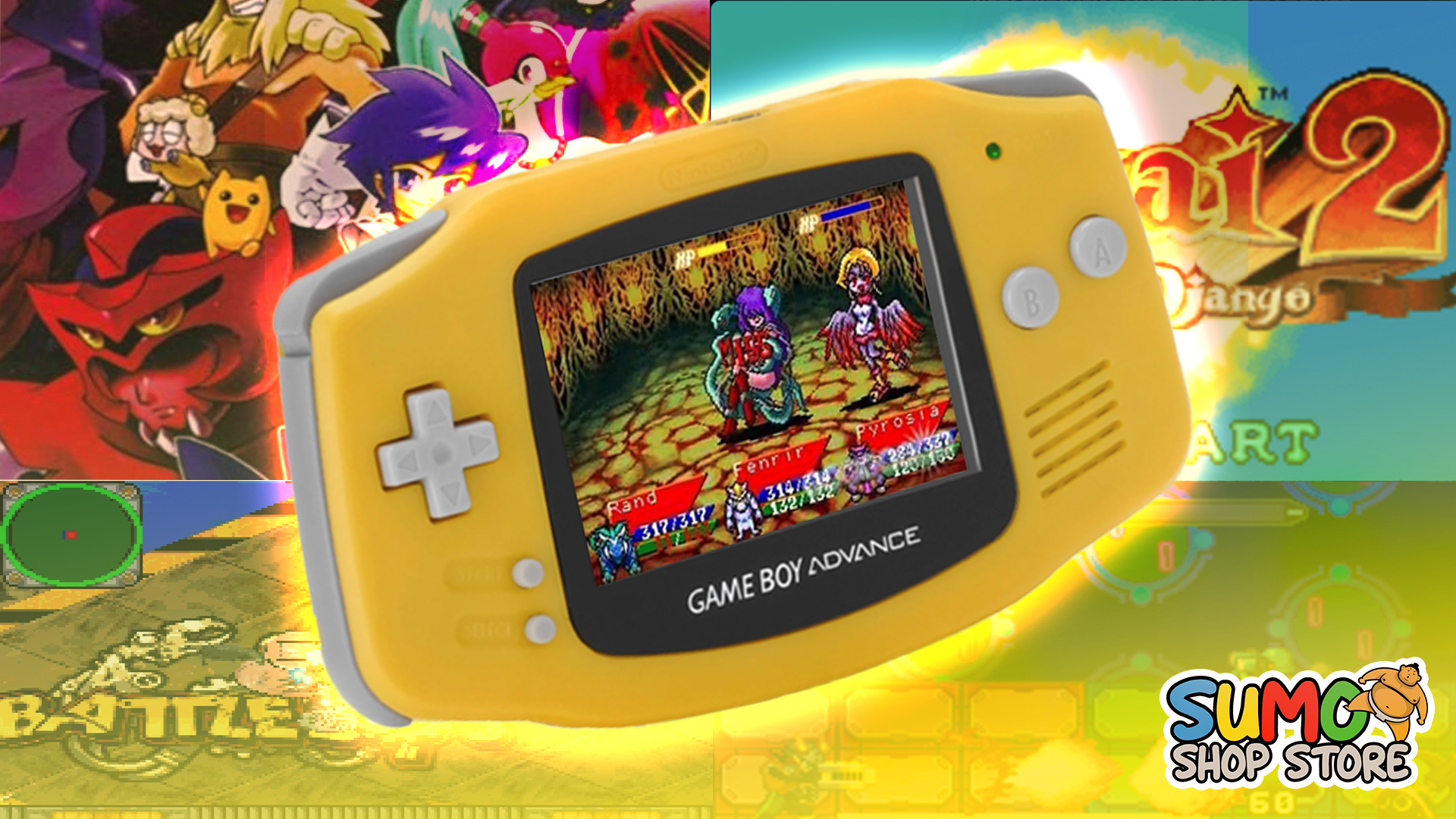
The Game Boy Advance has some of the most expensive cartridges in gaming history, and we’re not just talking about your typical Pokemon nostalgia pricing. Look, I get it—when you think expensive retro games, you probably think NES or SNES. But the GBA market has gone absolutely wild, with complete-in-box copies of certain games pushing $600 or more. And here’s the thing that gets me: some of these prices are actually justified by incredible gameplay innovation, while others are pure scarcity driving collector madness.
Hey, it’s Marco, and I’ve been tracking the GBA market for years now. The crew here at SumoShopStore sees these rare cartridges come through testing all the time, and let me tell you—authentication is crucial at these price points. The counterfeit market for expensive GBA games is brutal.
If you’re wondering which GBA games are worth the most money in 2026, here are the six rarest and most expensive cartridges that serious collectors are hunting for, ranging from $300 to over $600 complete-in-box.
Table of Contents
- Most Expensive GBA Games at a Glance
- Why GBA Games Cost So Much in 2026
- Mega Man Battle Network 6 — The Perfect Farewell to a Unique Series
- Tiny Toon Adventures: Scary Dreams — Treasure’s Hidden Beat-Em-Up Masterpiece
- Boktai 2: Solar Boy Django — The Solar Sensor Experiment That Was Ahead of Its Time
- BattleBots: Beyond the Battle Box — Cult Appeal Can’t Fix Choppy Animation
- Pokemon Emerald — Nostalgia Pricing at Its Most Extreme
- DemiKids Light & Dark — The Secret SMT Games That Defined Hidden Gem Status
- What Every GBA Collector Needs to Know in 2026
- Where to Pick Up a Game Boy Advance in 2026
- Frequently Asked Questions
- Are these GBA game prices actually justified in 2026?
- How can I tell if an expensive GBA game is authentic?
- Should I buy complete-in-box or just the cartridge?
- Which GBA model is best for playing expensive games?
- Will these prices keep going up?
- Are reproduction carts worth buying for expensive games?
- What’s the cheapest way to play these expensive GBA games?
- Why did GBA game prices explode compared to other retro consoles?
Most Expensive GBA Games at a Glance
- Mega Man Battle Network 6 — Final entry with unique RPG-card battle mechanics (~$300)
- Tiny Toon Adventures: Scary Dreams — Hidden Treasure-developed beat-em-up masterpiece (~$300)
- Boktai 2: Solar Boy Django — Revolutionary solar sensor cartridge technology (~$350)
- BattleBots: Beyond the Battle Box — Obscure TV tie-in with cult following (~$500)
- Pokemon Emerald — Most expensive Pokemon game on GBA (~$500+)
- DemiKids Light & Dark — Secret Shin Megami Tensei games for the West (~$600)
Why GBA Games Cost So Much in 2026
The GBA market exploded over the past few years, and it’s not just nostalgia driving these prices. You’ve got a perfect storm of factors: the console’s incredible library depth, heavy counterfeiting making authentic copies premium, and the fact that many of these expensive games represent final entries in beloved series or experimental hardware that was way ahead of its time.
Here’s something most people don’t know about the GBA collecting scene—condition matters more than almost any other retro platform. The cardboard boxes were flimsy, the manuals were tiny and easy to lose, and kids actually played these games to death. Finding a truly complete copy with box, manual, and inserts in good condition is genuinely rare.
And I’m not gonna lie, some of these prices are getting out of hand. But when you dig into what makes certain games expensive, there’s often a really good reason beyond just scarcity.
Mega Man Battle Network 6 — The Perfect Farewell to a Unique Series
Mega Man Battle Network 6 wraps up one of the most innovative RPG series on the GBA, and man, what a way to go out. This isn’t your typical Mega Man side-scroller—it’s essentially a full RPG that blends the real world with digital cyberspace in ways that still feel fresh today.


Mega Man Battle Network 6: Cybeast Gregar
The game has you controlling Lan in the real world, then jacking into computers to send Mega Man into digital environments. But here’s where it gets really special: battles happen on a 6×3 grid system that’s part tactical combat, part card game. You’re collecting BattleChips (basically cards) and building decks, then executing combos in real-time during grid-based battles.
The chip system is brilliant. Before each battle, you select 5 chips from your folder, use them as special attacks, then rely on your basic blaster until the timer refills and you can select more chips. It’s like Kingdom Hearts: Chain of Memories meets tactical RPG, and it works way better than it has any right to.
At around $300 for a complete copy, Battle Network 6 earns its price tag. This is the culmination of six games worth of mechanical refinement, and you can feel it in every battle. The series never came back after this, making it a genuine finale worth preserving.
Tiny Toon Adventures: Scary Dreams — Treasure’s Hidden Beat-Em-Up Masterpiece
When people think expensive GBA games, Tiny Toons probably isn’t the first thing that comes to mind. But here’s the thing—this game was developed by Treasure, the legendary studio behind Gunstar Heroes and Radiant Silvergun. And it shows.


Tiny Toon Adventures: Scary Dreams
Scary Dreams is a beat-em-up at its core, but Treasure packed in mechanics that feel like a prototype for their later GBA masterpiece, Astro Boy: Omega Factor. The combat system uses Street Fighter-style combo inputs, enemy juggling mechanics, and strategic positioning where you can knock smaller enemies into larger ones for massive damage.
Buster can call on other Tiny Toons characters, each with their own special moves and combo potential. The game rewards you for mastering the combo system rather than just button mashing, which gives it way more depth than your typical licensed game. You can see the DNA of Treasure’s signature style throughout—the same enemy juggling and knockback systems they’d perfect in later games.
The setup is simple enough—Buster’s trapped in a nightmare and has to fight his way out—but the execution is pure Treasure. The sprite work stays true to the animated series while the gameplay pushes the GBA hardware in creative ways.
At just over $300 complete, this one’s expensive because collectors finally woke up to what they missed. It’s not just a good licensed game; it’s a legitimate hidden gem from one of gaming’s most respected developers.
Boktai 2: Solar Boy Django — The Solar Sensor Experiment That Was Ahead of Its Time
Boktai 2 might be the most innovative cartridge ever made for the GBA, and I’m not exaggerating. This thing has an actual solar sensor built into the cart that requires real sunlight to power your weapons and affect gameplay mechanics. In 2005, they were doing augmented reality before AR was even a term.


Boktai 2: Solar Boy Django
The sequel improves on the original in every way. Where the first Boktai felt like a series of dungeon crawls, the second game opens up with stealth mechanics, RPG elements, and puzzles that actually use the solar sensor in creative ways. Sunlight affects item decay, weapon forging, shop prices—the whole game world responds to real-world light conditions.
Now, I’ll be honest—the sunlight requirement can be genuinely problematic. If you live somewhere with inconsistent weather (looking at you, Wales), your progress gets gated by actual weather patterns. But there’s something magical about a game that makes you step outside to power up your vampire-hunting arsenal.
The gameplay itself is solid action-adventure with legitimate stealth sequences. You’re not just running in and slashing everything—Django has to sneak through corridors, solve environmental puzzles, and use strategy against undead enemies. It’s way more sophisticated than most GBA action games.
At around $350 complete, Boktai 2 is expensive because the solar sensor makes it impossible to emulate properly. You need the real hardware, and that cartridge tech was years ahead of its time. This is gaming history in cartridge form.
BattleBots: Beyond the Battle Box — Cult Appeal Can’t Fix Choppy Animation
BattleBots represents the weird side of expensive GBA collecting—sometimes cult status and scarcity drive prices more than actual quality. Don’t get me wrong, there’s charm here, especially if you were a fan of the TV show. But at around $500 complete, this one’s hard to justify on gameplay alone.


BattleBots: Design & Destroy
The game captures the essence of the TV series well enough. You’re building and customizing combat robots, then taking them into arena battles with destructible environments. The customization system has decent depth—you can swap out weapons, armor, and wheels to create different fighting styles.
But here’s where it falls apart: the visuals are genuinely rough, even by GBA standards. The animation is choppy, the frame rate struggles during intense battles, and the sprite work lacks the polish you’d expect from a premium-priced game. It feels rushed in ways that other expensive GBA games don’t.
The multiplayer saves it somewhat. Link cable battles with friends actually capture that BattleBots tournament feeling, and there’s genuine strategy in robot design and arena navigation. But you’re paying cult classic prices for what amounts to a mediocre licensed game with some neat ideas.
If you’re a huge BattleBots fan, you probably already know whether this appeals to you. Everyone else should probably admire it from a distance and spend that $500 on something else.
Pokemon Emerald — Nostalgia Pricing at Its Most Extreme
Pokemon Emerald pushing $500+ complete-in-box is honestly ridiculous, and I’m not afraid to say it. Yes, it’s a great game. Yes, it’s the definitive Hoenn experience with both evil teams and the Battle Frontier. But let’s be real—this is nostalgia pricing on steroids.


Pokémon Emerald Slide
Emerald improves on Ruby and Sapphire in meaningful ways. The dual-team storyline makes more sense than either original version, the Battle Frontier adds serious post-game content, and the Pokemon distribution is the most balanced of the three Hoenn games. It’s objectively the best way to experience third-gen Pokemon.
But here’s what kills me—Emerald reuses so much content from Ruby and Sapphire that calling it a $500 experience feels insulting to genuinely innovative games. The engine is identical, most areas are recycled, and while the Battle Frontier is excellent, it’s not “pay rent money for a GBA game” excellent.
The pricing is driven purely by Pokemon’s cultural impact and the fact that Emerald was less common than Ruby and Sapphire. Completionist collectors need all three, and Emerald became the bottleneck. Supply and demand economics, not game quality.
Your mileage may vary on whether childhood memories justify these prices. But if you just want to play Pokemon Emerald, there are much cheaper ways to experience this adventure than hunting down a complete-in-box copy.
DemiKids Light & Dark — The Secret SMT Games That Defined Hidden Gem Status
Here’s something most people don’t know: DemiKids Light and Dark aren’t just Pokemon clones—they’re full-blown Shin Megami Tensei games disguised with kid-friendly art. At around $600 for the pair complete-in-box, these represent some of the rarest JRPGs on the platform.


DemiKids Light Dark
The demon negotiation system is pure SMT. Instead of weakening Pokemon and throwing balls, you’re having actual conversations with demons, trying to convince them to join your party through dialogue choices. Some demons want items, others respond to threats, and some just like your attitude. It’s way more complex than it initially appears.
The battle system, fusion mechanics, and darker storylines all scream Shin Megami Tensei. Atlus basically took their mature JRPG formula and made it accessible to Western kids who had no idea what SMT even was. These games were stealth introductions to one of gaming’s most hardcore franchises.
Both versions have exclusive demons and story differences, so completionists need both carts. The Western release was limited, and most people passed them by as Pokemon knockoffs. Now that retro JRPG collecting has exploded, collectors are realizing what they missed.
The $600 price tag reflects genuine rarity and quality. These aren’t just expensive because they’re scarce—they’re expensive because they’re genuinely great JRPGs that most people slept on. If you can find copies, you’re getting two of the best SMT experiences on a handheld.
What Every GBA Collector Needs to Know in 2026


The GBA market has some specific quirks that can save you money or help you avoid bad purchases. First, authentication is crucial—these expensive games are heavily counterfeited. Real GBA carts have specific label materials, font spacing, and cartridge plastics that fakes often get wrong.
Here’s what I look for: check the ESRB logo positioning, verify the Nintendo seal hologram, and examine the cartridge plastic color. Authentic GBA carts have a specific gray plastic tone that’s hard to replicate. If you’re buying online, demand detailed photos of these elements.
For actually playing these games, you want a GBA SP with the AGS-101 backlit screen. The original frontlit models make these detailed games harder to see, and many of these titles have dark color palettes that need proper backlighting. The solar sensor games like Boktai also work best on original hardware—some flash carts can’t replicate the sensor properly.
Region differences matter too. Japanese versions of some games are significantly cheaper, but you’ll need to factor in language barriers and potential hardware compatibility issues.
Complete-in-box vs. cart-only pricing has huge gaps. If you just want to play these games, cart-only versions cost dramatically less. But if you’re investing in collectibles, condition is everything—minty boxes and manuals drive these premium prices.
Where to Pick Up a Game Boy Advance in 2026


If reading about $600 GBA games has you wanting to dive into the platform, here’s the thing—finding a reliable system that can actually do these expensive games justice isn’t as simple as hitting eBay. You need proper screens, tested internals, and authentic hardware that can handle things like solar sensors.
Look, don’t fall for random listings where you can’t verify the screen type or internal condition. With games this expensive, you want hardware you can trust. eBay’s full of “works great!” listings that turn out to have dead pixels, worn buttons, or screens so dim you can barely see what you’re playing.
Here at SumoShopStore, we test every single GBA and GBA SP before it ships. I’m not just saying that—we’ve probably put hundreds of these through their paces over the years. Every button, every screen brightness level, every cartridge slot connection. If it doesn’t meet our standards, it doesn’t get sold.
What we offer:
- Fully tested units with guaranteed functionality
- IPS screen upgrades for perfect visibility
- USB-C charging modifications for modern convenience
- Wide variety of custom colors and transparent shells
- Free worldwide shipping and real customer support
Check out:
- Nintendo Gameboy Advance – Available in 30+ custom colors with IPS and USB-C upgrades
- Nintendo Gameboy Advance SP – The clamshell design with our guaranteed screen upgrades
If you’re serious about playing these expensive games the way they were meant to be experienced, browse the full collection at SumoShopStore.com.
Frequently Asked Questions
Are these GBA game prices actually justified in 2026?
Some are, some aren’t. Games like Boktai 2 and DemiKids earned their prices through genuine innovation and rarity. Pokemon Emerald at $500+ is mostly nostalgia inflation. The key is understanding whether you’re paying for scarcity or actual quality.
How can I tell if an expensive GBA game is authentic?
Check the label quality, ESRB logo positioning, and cartridge plastic color. Authentic GBA carts have specific gray plastic tones and holographic Nintendo seals that are hard to fake. When in doubt, buy from reputable sellers who guarantee authenticity.
Should I buy complete-in-box or just the cartridge?
Depends on your goals. Cart-only versions cost 60-80% less and play identically. Complete-in-box is for serious collectors or investment purposes. If you just want to experience these games, cart-only is the smart financial move.
Which GBA model is best for playing expensive games?
The GBA SP with AGS-101 backlit screen is ideal. Many of these expensive games have darker color palettes that look terrible on frontlit screens. Plus, solar sensor games like Boktai work best on authentic hardware rather than emulation.
Will these prices keep going up?
Hard to say. Pokemon will probably stay inflated due to cultural nostalgia. Games like DemiKids and Boktai might stabilize as more people discover them. The key is buying games you actually want to play, not just for investment.
Are reproduction carts worth buying for expensive games?
For playing purposes, quality reproductions can work well and cost much less. But they have no collectible value, may have compatibility issues with special hardware like solar sensors, and obviously aren’t authentic. Know what you’re buying.
What’s the cheapest way to play these expensive GBA games?
Emulation, flash carts, or Japanese versions for games that don’t require much text reading. If authenticity matters but you’re budget-conscious, cart-only versions of most titles cost dramatically less than complete copies.
Why did GBA game prices explode compared to other retro consoles?
Perfect storm: incredible game library, heavy counterfeiting making real copies premium, nostalgia for the last great 2D handheld, and YouTube/social media exposing hidden gems that people slept on. The GBA was hugely popular but many amazing games flew under the radar.
The Game Boy Advance market in 2026 is wild, expensive, and sometimes frustrating—but there’s genuine treasure here. These six games represent the extremes of GBA collecting: innovative gameplay, experimental hardware, cult classics, and pure nostalgia pricing. Whether they’re worth $300-600 depends on what you’re looking for and how much you value owning a piece of handheld gaming history.
So if you’re hunting for the most expensive GBA games in 2026, these are the holy grails that serious collectors are chasing. Just make sure you know what you’re paying for—and that your hardware can do these rare gems justice.
What are your thoughts on these prices? Have you managed to snag any of these expensive games, or are you sticking with more affordable options? Let us know in the comments.
